With the PPWR set to come into force across Europe this August, Germany is among the first countries to present a draft for a national implementation law. of the Packaging and Packaging Waste Regulation. The draft of the new Packaging Law Implementation Act (VerpackDG) was adopted by the German Cabinet on February 11 and is now under review by the Bundestag and Bundesrat, meaning further changes are still possible before it ultimately replaces the existing Packaging Act. Since the PPWR will be binding from 12 August 2026 onwards, the German implementation law needs to be published before 11 August 2026.
This marks an important shift for businesses operating in the German market. Compliance is no longer just an administrative task. It now directly affects packaging design, cost structure, risk exposure, and long-term planning. Companies must think beyond EPR registration and reporting. They need a structured compliance roadmap that connects legal requirements with operational processes for the end of life of their packaging.
VerpackDG Explained: Germany’s PPWR Implementation and What It Means in Practice
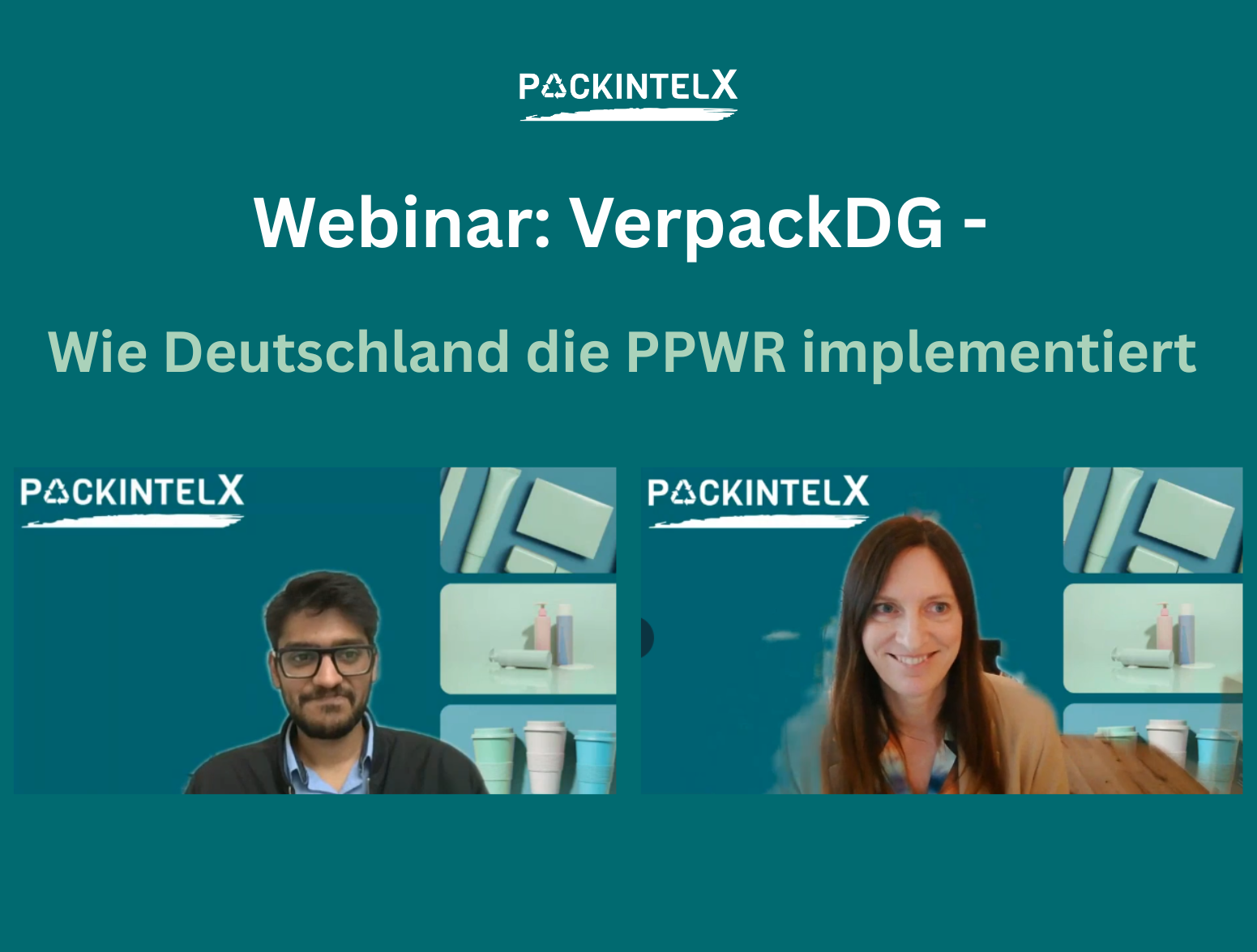
In our recent webinar, PackIntelX provided a practical update based on the Cabinet draft, focusing on obligations, recycling quotas, cost mechanisms, and enforcement.
The webinar explained how VerpackDG translates the EU packaging and packaging waste regulation into concrete national obligations. It covered Legal structure and scope, recycling targets and quotas, cost implications through EPR and fee modulation and the operational impact across the value chain. The purpose of the session was not only to inform participants about regulatory changes, but also to provide clear action steps. The goal was to help companies move from uncertainty to structured PPWR compliance with a clear roadmap and practical guidance.
You can access the full webinar here: https://youtu.be/WgcOR_kq9to
Take a look at the discussion points from the VerpackDG webinar mentioned below.
Key Pointers Discussed in the Webinar
| Topic | What the Regulation Introduces | Business Impact | Action Priority |
|---|---|---|---|
| Market Access | Registration + system participation required | Risk of market ban if non-compliant | Immediate |
| Recycling Targets | Up to 90% for key materials, plastics up to 80% by 2030 | Increased pressure on material choices | High |
| EPR Fee Modulation | Fees based on recyclability and recycled content | Direct cost impact from packaging design | High |
| Minimum Recycling Standard | ZSVR defines recyclability criteria annually | Design decisions must align with standards | High |
| Documentation & Reporting | Mandatory, structured, verifiable data | Audit risk and penalties if incomplete | Critical |
| Enforcement | Public register and automated monitoring | Reputational and legal risk | Critical |
| Chemical Recycling | Not clearly defined, case-by-case validation | Uncertainty in compliance strategy | Medium |
| Deposit System | €0.25 deposit for certain packaging types | Operational adjustments required | Medium |
VerpackDG is the national implementation of the EU PPWR and follows a holistic lifecycle approach. The key objective is clear: Waste reduction, higher recyclability, and stronger producer responsibility. The webinar focused on how VerpackDG changes daily business operations and long-term packaging strategy. It highlighted that regulation now influences financial and technical decisions across departments.
What VerpackDG Means for Manufacturers and Distributors
VerpackDG applies to manufacturers and distributors placing packaging on the German market. It represents a shift from general regulatory awareness to active enforcement. Authorities are increasing scrutiny through a public register, improving monitoring systems, and demanding structured documentation.
Companies must now ensure that their packaging compliance processes are accurate, complete, and aligned with both national and EU requirements. Documentation gaps can lead to financial penalties and operational restrictions.
Key structural changes include:
-
- Stronger enforcement and oversight by authorities (ZSVR)
-
- Eco-modulated EPR fees linking cost directly to recyclability and material choices
-
- Higher and binding recycling quotas across materials
-
- Significantly increased documentation, reporting, and audit requirements
-
- Minimum recyclability standards influencing packaging design decisions
While VerpackDG sets the legal framework, the real challenge lies in execution. Operational complexity increases when companies manage multiple suppliers, materials, and packaging formats.
The Strategic Impact of VerpackDG
VerpackDG is not just a legal update. It represents a fundamental shift in how packaging is managed and evaluated within companies.
Packaging design decisions now directly influence long-term cost structures. Through eco-modulated EPR fees, highly recyclable packaging and the use of recycled materials can reduce costs, while poorly designed packaging can lead to higher financial burden. Recyclability is therefore no longer only a sustainability objective, but a key factor for compliance and cost control.
At the same time, the regulation introduces minimum recyclability standards defined by the ZSVR, which companies must consider in their design and approval processes. Material selection becomes increasingly performance-driven, balancing functionality, recyclability, and regulatory requirements.
Poor or inconsistent documentation significantly increases compliance risk. VerpackDG requires structured, verifiable, and consistent data reporting, and companies must be able to demonstrate compliance across the entire value chain. Without reliable data management, this becomes difficult to achieve and may result in penalties or even market restrictions.
In addition, enforcement mechanisms such as public registers and automated monitoring by authorities increase transparency and accountability. Compliance is therefore no longer isolated within regulatory teams, but directly linked to operational processes, procurement decisions, and product development.
Overall, VerpackDG requires companies to move from reactive compliance to a more structured and integrated approach to packaging management, supported by robust data systems and clear internal processes.
The Real Operational Challenge: Supplier Coordination and Documentation
While VerpackDG defines the legal framework, the webinar clearly highlighted that the real challenge lies in practical implementation.
Compliance depends on accurate, consistent, and verifiable data across the entire value chain. This includes information from manufacturers, systems, and recyclers, as well as documented proof of recycling performance and material flows.
In practice, this creates several operational challenges:
-
- Ensuring consistent data reporting across systems and authorities
-
- Managing large volumes of packaging data (e.g. material, mass, system participation)
-
- Aligning internal processes with regulatory reporting requirements
-
- Coordinating with external stakeholders such as dual systems and recyclers
-
- Providing audit-ready documentation (e.g. quantities, recycling evidence, system confirmations)
Issuing an EU conformity declaration is not just about drafting a document. It requires coordination, verification, and structured information gathering. This process often becomes a major operational burden. Without proper systems, supplier communication can delay packaging compliance and increase risk.
How PackIntelX Supports VerpackDG Compliance
PackIntelX acts as a digital compliance infrastructure partner that helps companies turn regulatory pressure into structured processes.
Key support areas include:
-
- Automated EU conformity declaration workflows that simplify documentation preparation
-
- Alignment with VerpackDG and PPWR compliance requirements
-
- Centralized compliance data management for better visibility and control
-
- Structured documentation storage for audit readiness
-
- Support in supplier coordination and information validation
-
- PPWR recyclability assessment to identify cost-saving opportunities
-
- EPR optimization strategies to reduce eco-modulated fee exposure
-
- Circular economy consulting to improve material choices and sustainability performance
-
- Comprehensive compliance services and environmental compliance services designed for the packaging industry
By combining compliance digitalization with strategic expertise, PackIntelX enables efficiency, transparency, and long-term compliance control.
Building a Clear VerpackDG Compliance Roadmap
| Step | Action | Outcome |
| 1 | Audit packaging portfolio | Identify compliance gaps |
| 2 | Assess PPWR recyclability and EPR fee exposure | Understand cost impact |
| 3 | Identify supplier documentation gaps | Reduce the risk of incomplete data |
| 4 | Implement centralized compliance data management | Improve control and traceability |
| 5 | Align packaging to improve recyclability and lower environmental compliance fees. | Optimize cost and sustainability |
Structured digital systems reduce long-term cost and regulatory risk. A clear roadmap makes packaging compliance manageable and measurable.
Watch PackIntelX founder Siddharth Bagri discuss key insights at the Global Aerosol & Dispensing Summit in this YouTube video.
To Sum Up
VerpackDG represents a strategic turning point for companies operating in Germany. Packaging decisions now directly affect cost, sustainability performance, and regulatory exposure. Structured digital compliance and supplier coordination are no longer optional. They are critical success factors.
PackIntelX helps companies manage PPWR compliance, improve PPWR recyclability performance, streamline EU conformity declaration processes, and strengthen compliance data management. With the right compliance services and circular economy consulting, regulatory complexity can become a competitive advantage.
If your company is preparing for VerpackDG, now is the time to act. Connect with PackIntelX today and build a clear, digital, and future-ready packaging compliance strategy.
FAQs
1. What is VerpackDG and why is it important?
VerpackDG is Germany’s national implementation of the EU packaging and packaging waste regulation. It makes PPWR compliance legally binding at the national level and increases enforcement.
2. How does VerpackDG relate to PPWR?
VerpackDG translates PPWR requirements into concrete national obligations, ensuring that companies follow EU packaging standards within Germany.
3. How do eco-modulated EPR fees impact packaging costs?
Packaging with higher recyclability can benefit from lower EPR fees. Poorly recyclable materials may increase costs.
4. Why is supplier coordination critical under VerpackDG?
Compliance depends on accurate supplier data. Without proper coordination, documentation gaps can create regulatory risk.
5. How does PackIntelX support structured VerpackDG compliance?
PackIntelX provides compliance digitalization tools, automated EU conformity declaration workflows, compliance data management, and circular economy consulting to ensure efficient and reliable packaging compliance.