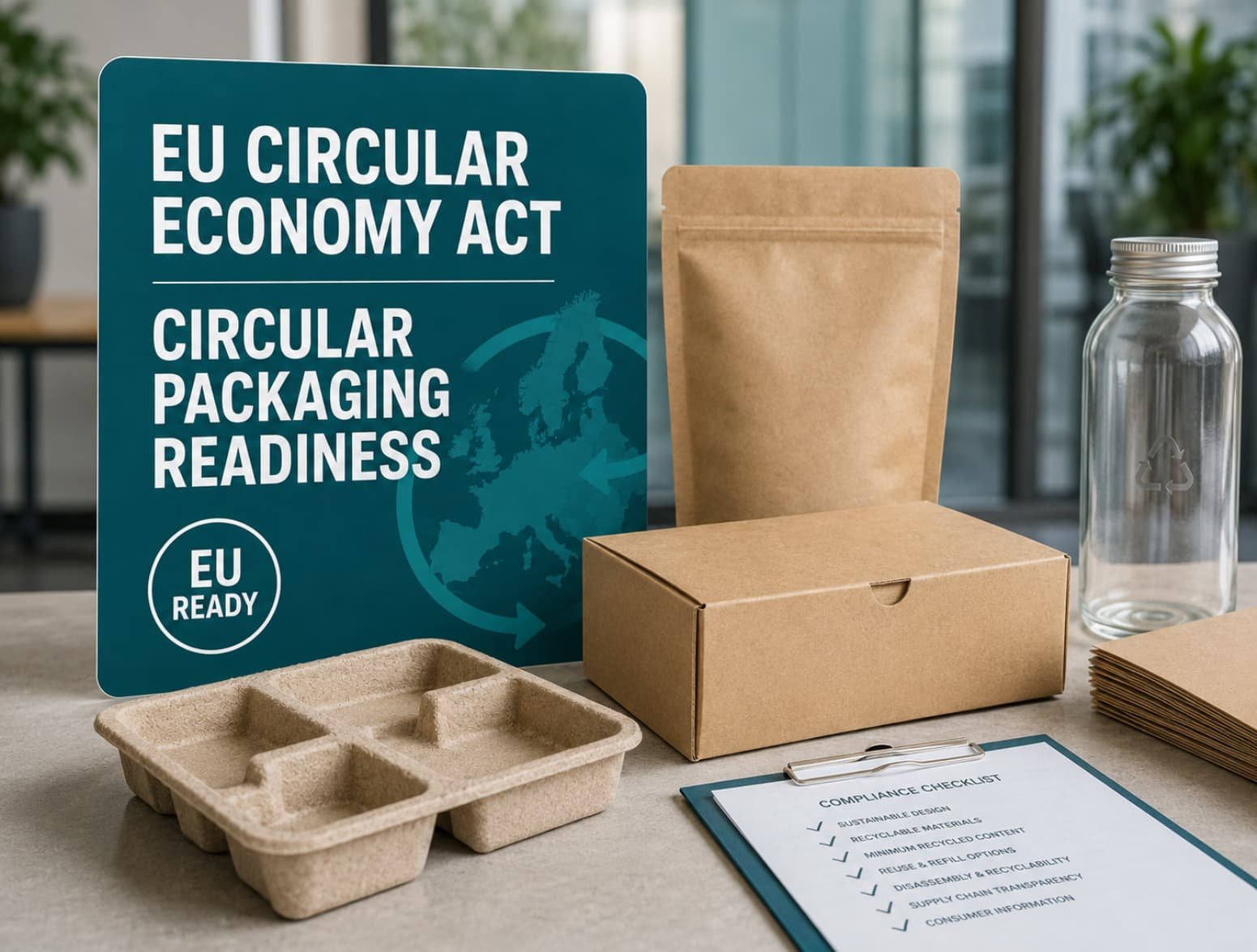
The European Union is taking another major step towards a more sustainable future with the proposed EU Circular Economy Act. As Europe continues implementing the Packaging and Packaging Waste Regulation (PPWR), the new initiative aims to strengthen the circular economy by improving access to secondary raw materials, increasing resource efficiency, and reducing dependence on virgin materials. While the legislation is still being developed, it signals the direction of future packaging regulations across the EU. For manufacturers, brand owners, and packaging suppliers, understanding the Circular Economy Act now can help support long-term compliance planning and strengthen preparedness for evolving packaging requirements.
What Is the EU Circular Economy Act?
The EU Circular Economy Act is an upcoming legislative initiative designed to accelerate Europe’s transition from a linear economy to a circular economy. Rather than relying heavily on extracting new raw materials, the Act aims to keep valuable resources in use for as long as possible through recycling, reuse, and improved material recovery.
One of its primary objectives is to create a stronger Single Market for secondary raw materials. This will help businesses access higher quality recycled materials while supporting greater consistency across EU Member States.
The initiative also complements broader European sustainability goals by encouraging investment in recycling infrastructure, reducing waste generation, and improving the availability of circular materials across industries.
Although the Circular Economy Act extends beyond packaging, the packaging industry is expected to be one of the sectors most significantly affected because packaging remains one of the largest users of raw materials and one of the biggest contributors to waste generation.
Why Does the Circular Economy Act Matter for Packaging?
Packaging plays an important role in Europe’s circular economy ambitions. Every year, millions of tonnes of packaging enter the European market, creating significant demand for both virgin and recycled materials.
The Circular Economy Act aims to improve how these materials are managed by encouraging greater use of recycled resources while reducing unnecessary waste. This supports businesses that are investing in sustainable packaging solutions and aligns with the broader objectives of the PPWR.
For packaging businesses, the proposed legislation could bring several long-term benefits:
- Greater availability of high-quality recycled materials
- Stronger recycling systems across Europe
- Better harmonisation of circular economy practices
- Increased investment in recycling infrastructure
- Improved market confidence in secondary raw materials
These developments will help create a more reliable circular supply chain while supporting businesses working towards long-term packaging compliance.
How Does the Circular Economy Act Support PPWR?
The Circular Economy Act and the PPWR have different objectives, but they are closely connected.
The PPWR establishes requirements for packaging design, recyclability, recycled content, and compliance documentation. The Circular Economy Act focuses on creating the market conditions needed to achieve those goals by strengthening Europe’s circular economy and increasing the supply of recycled materials.
Together, the two initiatives support a more sustainable packaging system.
| PPWR Focus | Circular Economy Act Focus |
| Packaging compliance | Circular economy development |
| Packaging recyclability | Secondary raw material markets |
| Recycled content targets | Increased recycled material supply |
| Packaging documentation | Resource efficiency |
| Circular packaging design | Investment in recycling infrastructure |
By improving access to recycled materials and supporting circular business models, the Circular Economy Act can help businesses meet future PPWR requirements more efficiently.
What Should Businesses Prepare For?
Although the legislation is still under development, businesses should not wait until the final rules are published. Early preparation can reduce future compliance risks while improving operational efficiency.
Key areas of preparation include:
Strengthen Packaging Data
Reliable packaging data will become increasingly important as businesses demonstrate compliance with multiple regulations. Companies should ensure information relating to packaging materials, composition, and recyclability is accurate and well organised.
Improve Supplier Collaboration
Many compliance obligations depend on supplier information. Businesses should work closely with suppliers to obtain reliable data on recycled content, material composition, and supporting documentation.
Plan for Secondary Raw Materials
As demand for recycled materials continues to increase, businesses should begin evaluating their sourcing strategies. Establishing reliable supply chains early can reduce future procurement challenges.
Review Technical Documentation
Documentation remains a key part of regulatory compliance. Businesses should ensure packaging information, declarations, and supporting evidence are complete and easily accessible.
Invest in Circular Packaging
Packaging designed for reuse and recycling will become increasingly valuable as Europe strengthens its circular economy framework. Businesses should review existing packaging portfolios and identify opportunities for improvement.
What Challenges Can Businesses Expect?
The transition towards a circular economy also presents several practical challenges.
Limited Availability of Recycled Materials
Demand for secondary raw materials is expected to increase significantly across multiple industries. Businesses may face increased competition when sourcing compliant recycled materials.
Complex Supply Chains
Packaging often involves suppliers across several countries. Collecting accurate information from multiple partners can become increasingly difficult as documentation requirements expand.
Regulatory Alignment
Businesses will need to monitor both the PPWR and future Circular Economy Act developments to ensure packaging strategies remain aligned with evolving legislation.
Data Management
Managing packaging data across different products, suppliers, and markets requires structured systems that support consistency and traceability.
Long-Term Investment
Some organisations may need to redesign packaging, adopt new materials, or invest in digital compliance processes to remain competitive under future circular economy requirements.
Key Business Priorities Before the Circular Economy Act
Preparing early allows businesses to respond more effectively as new circular economy requirements continue to evolve. The following priorities can help organisations strengthen both compliance readiness and long-term sustainability.
| Business Priority | Why It Matters |
| Packaging Data Management | Supports accurate compliance records and reporting |
| Supplier Collaboration | Improves transparency across the supply chain |
| Secondary Raw Material Planning | Helps secure future recycled material availability |
| Recyclability Assessments | Supports alignment with PPWR objectives |
| Compliance Documentation | Improves audit readiness and regulatory verification |
| Circular Packaging Design | Supports long-term sustainability goals |
| Digital Compliance Systems | Simplifies management of regulatory information |
| Regulatory Monitoring | Helps businesses stay prepared for legislative updates |
Why Early Preparation Matters
The Circular Economy Act reflects Europe’s long-term commitment to building a competitive and resource-efficient economy. While implementation will take place over several years, businesses that begin preparing today will have more time to adapt packaging designs, strengthen supplier relationships, and improve compliance processes.
Preparing early also reduces the likelihood of last-minute operational disruptions as future regulations become applicable. Organisations that invest in packaging data, recyclability assessments, and documentation today will be in a stronger position to respond to future regulatory developments.
Conclusion
The proposed EU Circular Economy Act represents another important milestone in Europe’s transition towards a more circular economy. Working alongside the PPWR, it aims to improve resource efficiency, strengthen secondary raw material markets, and encourage more sustainable packaging across the European Union.
For businesses, the message is clear. Future packaging compliance will extend beyond meeting regulatory requirements alone. Success will depend on strong packaging data, reliable supplier collaboration, effective documentation, and long-term planning for circular packaging.
PackIntelX helps businesses prepare for this transition through expert consultation, practical workshops, and digital compliance solutions that simplify packaging compliance and support long-term regulatory readiness.
Prepare for the future of circular packaging with PackIntelX and build a smarter compliance strategy today.