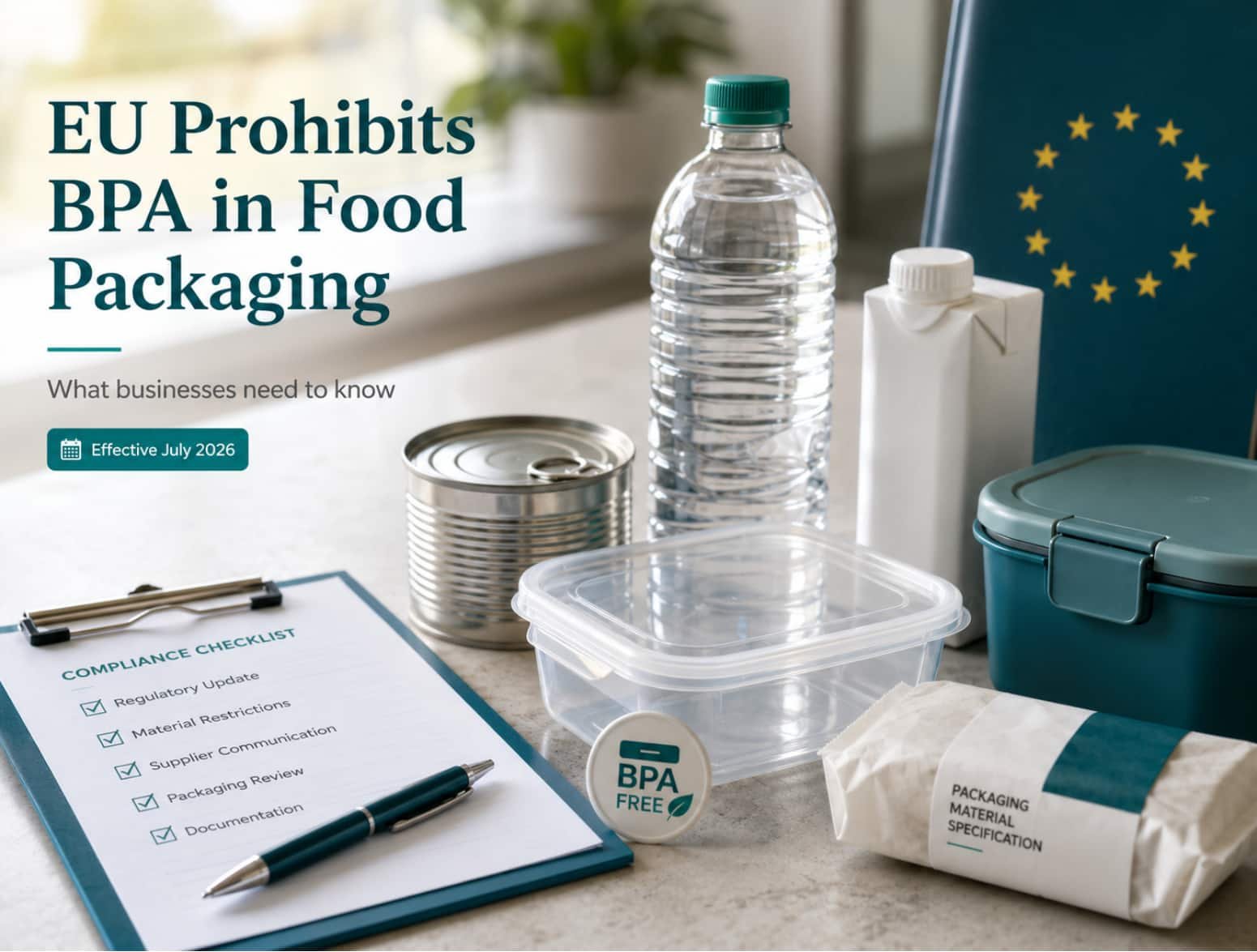
From July 2026, the European Union has introduced one of its strictest food packaging regulations by prohibiting the use of Bisphenol A (BPA) and certain other bisphenols in food packaging and food contact materials. The move reflects growing scientific evidence about the health risks associated with BPA exposure and marks another significant step toward safer packaging across the EU.
For manufacturers, brand owners, and packaging suppliers, this is more than a material change. It is a packaging compliance requirement that calls for careful review of packaging materials, supplier documentation, and regulatory processes. Businesses that place food packaging on the EU market should understand what the new rules mean and prepare early to ensure continued compliance.
What Is Bisphenol A (BPA)?
Bisphenol A (BPA) is an industrial chemical widely used in the production of polycarbonate plastics and epoxy resins. These materials have been commonly used in food packaging because they offer durability, transparency, and resistance to moisture and heat.
BPA has traditionally been found in:
- Interior coatings of food and beverage cans
- Plastic food containers
- Food wrappers
- Plastic films
- Printing inks
- Adhesives used in packaging
Epoxy resin coatings are particularly common because they prevent metal cans from rusting and help protect food quality. However, small amounts of Bisphenol A (BPA) can migrate from packaging into food and beverages, making food contact materials one of the primary sources of human exposure.
As scientific understanding has evolved, regulators have become increasingly concerned about the long-term impact of BPA on human health.
Why Has the EU Prohibited BPA in Food Packaging?
The decision follows years of scientific assessment by the European Food Safety Authority (EFSA), which concluded that BPA may pose health risks even at very low exposure levels.
Research suggests that Bisphenol A (BPA) can interfere with the body’s hormonal system by mimicking estrogen. Because hormones regulate many essential biological functions, long-term exposure may affect several aspects of human health.
Potential health concerns include:
- Hormonal disruption
- Reduced fertility
- Changes in immune system function
- Increased risk of asthma and autoimmune diseases
- Potential links to cardiovascular disease
- Increased risk of obesity and diabetes
- Possible association with certain cancers
Based on these findings, EFSA significantly reduced the tolerable daily intake of BPA, leading to stricter regulatory action across the European Union.
The new restrictions aim to reduce consumer exposure by limiting BPA in food packaging, where direct contact with food creates the greatest potential risk.
What Does the New EU BPA Ban Cover?
The new EU food packaging regulation applies from July 2026 and prohibits the sale of many food contact materials containing Bisphenol A (BPA) and certain related bisphenols.
The regulation covers a wide range of products, including:
- Food wrappers
- Food containers
- Plastic water bottles
- Lunch boxes
- Kitchenware
- Beverage packaging
- Packaging coatings that come into direct contact with food
The restriction applies to both single-use and reusable food packaging products.
However, the transition will not happen overnight. The EU has introduced limited exceptions where suitable alternatives are not yet commercially available. Certain packaging applications, including some BPA-coated cans for acidic foods, may continue under transitional arrangements until 2028.
Existing products already placed on the market may also continue to be sold until available stock is exhausted, helping reduce unnecessary food waste.
What This Means for Businesses and Packaging Compliance
The BPA prohibition introduces new responsibilities for businesses across the packaging value chain. Manufacturers, food producers, importers, and brand owners should begin reviewing their packaging systems to ensure continued packaging compliance.
Several areas require immediate attention.
Review Food Contact Materials
Businesses should identify all food contact materials currently used within their product portfolio and determine whether BPA or related bisphenols are present.
Verify Supplier Information
Suppliers should provide updated material specifications and declarations confirming compliance with the latest EU requirements. Reliable supplier documentation becomes increasingly important for maintaining packaging compliance.
Evaluate Alternative Materials
Where BPA-containing materials are currently used, businesses should assess suitable BPA-free packaging alternatives that meet both product performance and regulatory requirements.
Strengthen Compliance Documentation
Complete compliance documentation should demonstrate that packaging materials satisfy applicable regulatory requirements. Maintaining accurate records supports inspections, audits, and future regulatory reviews.
Prepare for Future PPWR Requirements
Although the BPA restriction is separate from the PPWR, both initiatives reflect the EU’s broader focus on safer, more sustainable packaging. Businesses that strengthen their compliance processes today will also be better prepared for future PPWR obligations.
Key Areas Businesses Should Review for BPA Compliance
Preparing for the new BPA requirements involves more than replacing packaging materials. Businesses should review documentation, supplier information, testing processes, and regulatory monitoring to build a strong and reliable compliance strategy.
| Compliance Area | Why It Matters? |
| Food Contact Materials | Confirm packaging materials comply with the new BPA restrictions. |
| Supplier Documentation | Verify declarations and material specifications from suppliers. |
| BPA Free Packaging | Evaluate suitable alternative materials before implementation deadlines. |
| Compliance Documentation | Maintain complete technical records to demonstrate packaging compliance. |
| Material Testing | Validate packaging safety where testing is required. |
| Regulatory Monitoring | Stay informed about future updates to EU food packaging regulation. |
| PPWR Readiness | Align packaging strategies with broader European packaging requirements. |
Summing Up
The EU prohibition of Bisphenol A (BPA) in food packaging represents another major milestone in the evolution of European packaging legislation. While the regulation focuses on improving consumer safety, it also creates new responsibilities for businesses involved in designing, manufacturing, and supplying food contact materials.
Early preparation is essential. Reviewing packaging materials, strengthening supplier coordination, maintaining accurate compliance documentation, and evaluating BPA-free packaging alternatives will help businesses adapt smoothly to the new requirements.
As packaging regulations continue to expand through initiatives such as the PPWR, companies need structured compliance processes that can evolve alongside changing legislation. PackIntelX helps businesses simplify packaging compliance through expert consultation, practical workshops, and digital compliance solutions that support long-term regulatory readiness.
Prepare your business for evolving EU packaging regulations with PackIntelX and simplify packaging compliance with confidence.
FAQs
1. What is Bisphenol A (BPA)?
Bisphenol A (BPA) is an industrial chemical commonly used in plastics and epoxy resins for food packaging and food contact materials. It has been widely used because of its durability, but concerns about its health effects have led to stricter EU regulations.
2. Why has the EU prohibited BPA in food packaging?
The EU introduced the BPA ban after scientific studies linked Bisphenol A (BPA) to potential health risks, including hormonal disruption, immune system effects, and reproductive concerns. The regulation aims to reduce consumer exposure through safer food packaging.
3. Which products are covered under the new BPA ban?
The regulation applies to many food contact materials, including food containers, food wrappers, beverage packaging, plastic water bottles, lunch boxes, and kitchenware. Some limited transition periods remain where suitable alternatives are not yet available.
4. How should businesses prepare for the new BPA requirements?
Businesses should review packaging materials, verify supplier documentation, evaluate BPA free packaging alternatives, strengthen compliance documentation, and ensure their packaging compliance processes align with current EU regulatory requirements.
5. How can PackIntelX help businesses comply with the new EU food packaging rules?
PackIntelX supports businesses through regulatory consultation, compliance workshops, digital documentation management, supplier coordination, packaging data management, and PPWR readiness solutions, helping organizations build efficient and scalable packaging compliance processes.