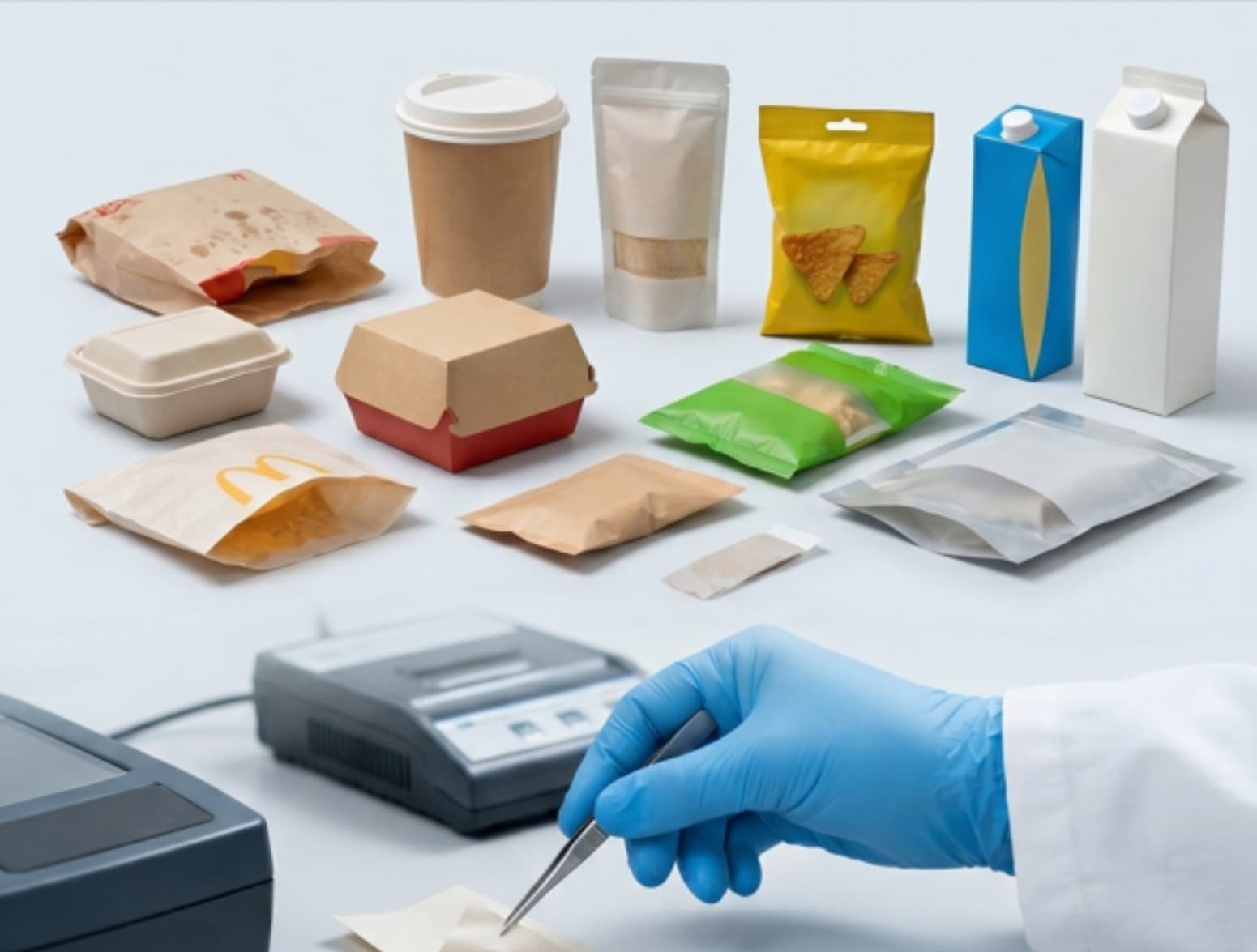
The EU Packaging and Packaging Waste Regulation is changing how companies approach packaging safety, sustainability, and compliance. While many businesses initially focused on recyclability and waste reduction under PPWR, another major area is now becoming critical: chemical safety.
Two of the most important substances receiving attention are PFAS Chemicals and heavy metals. These substances are now classified as substances of concern under PPWR because of their long-term impact on human health and the environment. As enforcement begins from August 12, 2026, businesses placing packaging on the EU market must ensure their packaging materials meet strict safety thresholds and documentation requirements.
For manufacturers, brand owners, converters, and suppliers, this is no longer only about packaging design or recyclability performance. It is now about testing, traceability, supplier coordination, compliance systems, and technical documentation.
Companies that fail to prepare may face operational risks, delays, compliance issues, and increased regulatory pressure. Businesses that prepare early with structured systems and proper supplier coordination will be in a much stronger position.
What Are PFAS Chemicals?
PFAS Chemicals are a large group of synthetic substances commonly used in industrial and consumer products. They are often added to packaging because they provide resistance against grease, oil, water, and heat.
These chemicals are widely used in:
- Fast food wrappers
- Grease-resistant paper
- Takeaway containers
- Bakery packaging
- Disposable Food Packaging
- Coated paper products
- Microwave popcorn bags
- Beverage packaging applications
PFAS are also known as Forever Chemicals because they do not easily break down in the environment. Once released, they can remain in soil, water, and living organisms for a very long time.
This is one of the main reasons why PFAS Regulations are becoming stricter across the EU and globally.
For years, PFAS Chemicals were considered useful because they improved packaging performance. However, environmental and health concerns have increased significantly. Regulatory authorities now consider these substances a major sustainability and safety issue.
As a result, businesses working with Food Packaging and Food Contact Materials must now pay much closer attention to chemical composition and supplier documentation.
Why PFAS Chemicals Are Restricted Under PPWR?
Under PPWR, the EU is focusing strongly on safer Food Contact Materials and reducing harmful chemical exposure.
The regulation introduces strict restrictions on PFAS in packaging that comes into direct contact with food. The goal is to reduce environmental contamination and protect consumer health.
The PPWR thresholds for PFAS in food-contact packaging include:
| PFAS Threshold | Limit |
| Individual non-polymeric PFAS | 25 ppb |
| Sum of targeted non-polymeric PFAS | 250 ppb |
| Total fluorine from PFAS sources | 50 ppm |
These limits make PFAS Testing and supplier verification extremely important for businesses working with Food Packaging.
Companies must now prove that packaging materials remain below these thresholds through structured Compliance Documentation and testing records.
This means businesses cannot rely only on supplier assumptions or outdated declarations. They need updated technical information, validated testing data, and strong traceability systems.
The restriction also reflects a wider shift in EU packaging policy. PPWR is no longer focused only on waste management. It is now connecting recyclability, sustainability, and chemical safety into one broader compliance framework.
What Are Heavy Metals in Packaging?
Heavy metals are toxic metallic substances that may exist in packaging materials, inks, coatings, pigments, adhesives, or additives.
The PPWR specifically regulates:
- Lead (Pb)
- Cadmium (Cd)
- Mercury (Hg)
- Hexavalent Chromium (Cr VI)
These substances can leak into the environment through packaging waste and create long-term environmental risks.
Heavy metals may enter recycling streams, contaminate waste systems, or impact environmental safety if not properly controlled.
Under PPWR, the total combined concentration of these heavy metals must not exceed:
100 mg/kg or 100 ppm
This rule applies to all packaging and packaging components placed on the EU market.
As a result, businesses now require stronger testing systems, supplier transparency, and accurate Regulatory Documentation to demonstrate compliance.
For packaging manufacturers, this means that material sourcing decisions become much more important. Every component, coating, printing ink, and packaging layer may need verification.
Why PFAS and Heavy Metals Matter for Packaging Compliance
The restrictions around PFAS Chemicals and heavy metals are changing how companies manage packaging compliance under PPWR.
Previously, many businesses focused mainly on recyclability and packaging waste reduction. Now, molecular-level material safety is becoming equally important.
This creates several new operational responsibilities:
- Supplier data collection
- Material composition verification
- PFAS Testing
- Chemical traceability
- Technical documentation management
- Structured PFAS Declaration processes
- Continuous compliance monitoring
- Laboratory coordination
- Regulatory reporting
- Packaging material validation
Companies must also ensure that all declarations align with broader EU conformity declaration requirements under PPWR.
Without proper systems, managing chemical compliance across multiple suppliers and packaging SKUs becomes difficult.
For global businesses, the challenge becomes even larger because packaging materials may come from multiple countries, suppliers, and manufacturing sites.
This means businesses need stronger compliance infrastructure and centralized compliance data management systems.
The Growing Importance of Food Contact Materials
Food Contact Materials are receiving especially high attention under PPWR because of direct consumer exposure.
Packaging that comes into contact with food must now meet strict safety standards related to PFAS Chemicals and heavy metals.
This affects industries such as:
- Food and beverage
- Quick service restaurants
- Retail packaging
- Bakery packaging
- Frozen food packaging
- Beverage cups and containers
- Takeaway and delivery packaging
Companies working with Food Packaging can no longer focus only on functionality and branding. Packaging must now also meet stricter PFAS Standards and safety thresholds.
This is increasing pressure on procurement teams, sustainability departments, and packaging engineers to work more closely together.
PFAS Compliance Challenges for Businesses
For many companies, the biggest challenge is not understanding the regulation. The real challenge is implementation.
Some of the most common difficulties include:
1. Supplier Coordination
Most chemical composition data comes directly from suppliers. Businesses must collect accurate information from multiple vendors across different regions.
2. Complex Testing Requirements
PFAS Testing requires specialized laboratory analysis and clear verification procedures.
3. Documentation Management
Businesses need structured Compliance Documentation and Regulatory Documentation that support every packaging claim.
4. Material Traceability
Companies must show where materials come from and how chemical data is tracked throughout the supply chain.
5. Evolving PFAS Regulations
As EU regulations continue evolving, businesses must continuously monitor changes and update compliance processes.
6. Managing Large Packaging Portfolios
Many companies manage hundreds or thousands of packaging SKUs, making compliance verification more difficult.
7. Coordination Across Departments
PFAS Compliance impacts procurement, sustainability, quality assurance, legal teams, and packaging development.
These challenges are increasing the demand for digital compliance systems and centralized packaging data management.
Managing PFAS and Heavy Metal Risks Under PPWR
As PPWR requirements become stricter, businesses must look beyond recyclability and focus on chemical safety in packaging. The table below highlights key packaging risks, compliance priorities, and practical actions companies should take to strengthen PFAS Compliance, improve Regulatory Documentation, and reduce long-term packaging compliance risks.
| Packaging Material Type | Potential PFAS or Heavy Metal Risk | Recommended Compliance Action | Related Compliance Focus |
| Paper-based takeaway packaging | Grease-resistant coatings may contain PFAS Chemicals | Conduct PFAS Testing before EU market placement | PFAS Compliance |
| Printed flexible packaging | Printing inks may contain restricted heavy metals | Review supplier chemical declarations and ink composition | Regulatory Documentation |
| Multi-layer food packaging | Difficult traceability across material layers | Build centralized Compliance Documentation workflows | Packaging Compliance |
| Imported packaging materials | Different global chemical standards may apply | Validate material data against EU PFAS Standards | PFAS Regulations |
| Recycled-content packaging | Risk of unintended chemical contamination | Strengthen supplier audits and testing procedures | Compliance Documentation |
| Beverage cups and lids | Direct food contact exposure risk | Verify Food Contact Materials for PFAS thresholds | Food Packaging |
| Packaging adhesives and coatings | Hidden chemical additives may be present | Request complete material composition records | PFAS Declaration |
| Large packaging portfolios | High documentation and tracking complexity | Use digital compliance systems for compliance data management | Packaging Compliance |
| Packaging sourced from multiple suppliers | Inconsistent technical documentation | Standardize supplier onboarding and reporting processes | Regulatory Documentation |
| Future packaging redesign projects | Risk of non-compliant material selection | Integrate PFAS Compliance checks early in packaging development | PFAS Standards |
Why PFAS Testing Is Becoming Essential?
PFAS Testing is becoming one of the most important parts of PPWR preparation.
Testing helps companies:
- Verify PFAS concentration levels
- Confirm supplier claims
- Identify high-risk materials
- Support PFAS Declaration processes
- Prepare for audits and inspections
- Reduce regulatory risk
- Strengthen packaging compliance programs
Without proper PFAS Testing, companies may not be able to prove compliance under PPWR.
Testing is especially important for Food Packaging because food-contact materials are under stricter regulatory scrutiny.
Businesses should also ensure that testing results are properly stored and linked to technical documentation systems.
The Importance of Compliance Documentation and Regulatory Documentation
Under PPWR, testing alone is not enough. Businesses must also maintain complete documentation to prove compliance.
Strong PFAS Compliance systems should include:
- Laboratory testing reports
- Supplier declarations
- Technical specifications
- Material composition records
- Chemical traceability documentation
- Audit-ready compliance files
- Structured PFAS Declaration workflows
- Packaging specifications
- Safety certifications
- Compliance validation reports
This information becomes essential during inspections, audits, and EU conformity declaration processes.
Without organized Compliance Documentation, companies may face delays, penalties, or restricted market access.
Strong Regulatory Documentation also improves internal efficiency because teams can access packaging information more quickly and accurately.
As PPWR obligations expand, businesses with centralized documentation systems will be much better prepared.
The Connection Between PFAS Compliance and Recyclability
Many companies currently focus heavily on recyclability under PPWR. However, chemical safety and recyclability are now becoming closely connected.
Packaging materials containing restricted substances may create challenges within recycling systems and circular economy processes.
This means businesses must now evaluate packaging from multiple perspectives:
- Recyclability performance
- Chemical composition
- Material safety
- Environmental impact
- Supplier traceability
- Regulatory compliance
This broader approach is changing how packaging decisions are made across the industry.
Packaging developers now need to consider whether materials support both recyclability goals and PFAS Standards.
How Businesses Can Prepare for PFAS and Heavy Metal Compliance?
Companies should start preparing well before the August 2026 enforcement timeline.
Key preparation steps include:
- Audit current packaging materials
- Identify PFAS exposure risks
- Review heavy metal content in packaging components
- Strengthen supplier communication
- Implement structured documentation systems
- Conduct regular PFAS Testing
- Improve packaging traceability
- Build centralized compliance workflows
- Train procurement and sustainability teams
- Monitor changing PFAS Standards and regulations
- Review Food Contact Materials carefully
- Create internal compliance review procedures
- Digitize compliance records and supplier data
Early preparation helps reduce operational risks and improves long-term packaging compliance readiness.
Businesses that wait until enforcement deadlines approach may struggle with supplier coordination, missing documentation, and testing delays.
Why Compliance Digitalisation Is Becoming Critical?
Managing PFAS Compliance manually becomes extremely difficult as packaging portfolios grow.
Many businesses still rely on spreadsheets, emails, and disconnected systems for supplier documentation and compliance tracking.
This creates problems such as:
- Missing supplier data
- Duplicate records
- Outdated declarations
- Slow document retrieval
- Inconsistent packaging information
- Poor audit readiness
Compliance digitalization helps solve these issues by centralizing packaging data and creating structured workflows.
Digital systems also help companies:
- Track testing records
- Manage PFAS Declaration workflows
- Store Regulatory Documentation
- Improve supplier coordination
- Monitor packaging risks
- Simplify audit preparation
As PPWR obligations continue expanding, compliance digitalization will become increasingly important for operational efficiency.
How PackIntelX Supports PFAS Compliance Under PPWR?
PackIntelX helps companies manage complex packaging compliance requirements through structured digital systems.
The platform supports businesses with:
1. Centralized Compliance Data Management: Manage packaging data, supplier information, testing records, and technical files in one platform.
2. Supplier Onboarding and Coordination: Collect supplier declarations and technical documentation more efficiently.
3. EU Conformity Declaration Support: Simplify compliance workflows and maintain structured declaration processes.
4. Regulatory Documentation Management: Store and organize compliance records for audits and inspections.
5. Recyclability and Material Analysis: Combine recyclability assessments with broader material compliance strategies.
6. PPWR Readiness Planning: Identify packaging risks and prepare for upcoming enforcement timelines.
7. Packaging Portfolio Analysis: Assess packaging materials for compliance gaps and areas of concern.
8. Technical Documentation Support: Structure compliance records for stronger audit readiness.
As PPWR requirements continue expanding, PackIntelX helps businesses move from reactive compliance management to proactive digital compliance infrastructure.
The platform is designed to simplify operational complexity while helping businesses improve transparency, efficiency, and long-term compliance readiness.
Key Takeaways
- PFAS Chemicals and heavy metals are now major compliance priorities under PPWR.
- Food-contact packaging faces strict PFAS concentration thresholds from August 2026.
- Businesses must strengthen PFAS Testing, supplier coordination, and traceability systems.
- Structured Compliance Documentation and Regulatory Documentation are essential for audits and EU conformity declaration processes.
- PackIntelX helps businesses simplify PFAS Compliance through centralized digital compliance management.
Conclusion
PPWR is changing packaging compliance at every level. The focus is no longer limited to recyclability and waste reduction. Businesses must now also manage chemical safety, supplier transparency, and molecular-level compliance requirements.
Restrictions around PFAS Chemicals, Forever Chemicals, and heavy metals are creating new operational responsibilities for manufacturers, suppliers, and brand owners across the packaging industry. Companies that build structured compliance systems early will be better prepared for audits, regulatory checks, and future packaging requirements.
PFAS Compliance is quickly becoming a strategic business priority rather than only a regulatory obligation. Companies that improve supplier coordination, strengthen PFAS Testing processes, and digitize their Compliance Documentation will gain stronger operational control and reduce long-term compliance risks.
As PFAS Regulations continue evolving, businesses need scalable systems that support packaging compliance, regulatory transparency, and efficient data management.
PackIntelX helps businesses simplify PFAS Compliance, strengthen documentation processes, manage supplier coordination, and prepare for evolving PPWR obligations through smarter digital compliance infrastructure.
Get ahead of evolving PFAS Regulations with PackIntelX and build a smarter, faster, and more scalable packaging compliance system today.
FAQs
1. What are PFAS Chemicals?
PFAS Chemicals are synthetic substances commonly used in Food Packaging to provide resistance against grease, water, and heat. These substances are often called Forever Chemicals because they remain in the environment for a very long time and do not break down easily.
2. Why are PFAS Chemicals restricted under PPWR?
PFAS Chemicals are restricted under PPWR because they may create environmental and health concerns when used in Food Contact Materials. The regulation aims to reduce long term chemical exposure and improve safety standards across Food Packaging placed on the EU market.
3. What is PFAS Testing?
PFAS Testing is the process of checking packaging materials for the presence and concentration of PFAS Chemicals. This helps businesses verify PFAS Compliance, meet PFAS Standards, and maintain accurate Compliance Documentation required under PPWR regulations.
4. What are Forever Chemicals?
Forever Chemicals are substances that stay in the environment for many years without naturally breaking down. PFAS Chemicals fall into this category because they can accumulate in water, soil, and food systems, creating long term environmental and sustainability concerns.
5. What heavy metals are restricted under PPWR?
PPWR restricts heavy metals such as lead, cadmium, mercury, and hexavalent chromium in packaging materials. These substances are limited because they can harm the environment and create risks when packaging waste enters recycling or disposal systems.
6. What is the heavy metal limit under PPWR?
Under PPWR, the total combined concentration of lead, cadmium, mercury, and hexavalent chromium must not exceed 100 ppm in packaging or packaging components. Businesses must maintain Regulatory Documentation and testing records to prove compliance during inspections or audits.
7. Why is Compliance Documentation important?
Compliance Documentation helps businesses demonstrate that packaging materials meet PFAS Regulations and PPWR requirements. Proper documentation supports audit readiness, improves traceability, and ensures companies can verify material safety, testing data, and supplier information when requested by authorities.
8. What is a PFAS Declaration?
A PFAS Declaration is a document that confirms packaging materials comply with applicable PFAS Standards and regulatory requirements. It usually includes supplier information, testing results, chemical composition details, and supporting Regulatory Documentation linked to PFAS Compliance processes.
9. How does PackIntelX support PFAS Compliance?
PackIntelX supports PFAS Compliance by helping businesses manage supplier coordination, Compliance Documentation, Regulatory Documentation, and digital workflows. The platform also supports packaging traceability, testing management, and structured compliance processes for Food Packaging and Food Contact Materials.
10. Why are PFAS Regulations becoming stricter?
PFAS Regulations are becoming stricter because regulators are increasingly concerned about environmental contamination, human health risks, and the long-term impact of Forever Chemicals. Stricter rules encourage safer Food Packaging materials and improved sustainability practices across the packaging industry.