
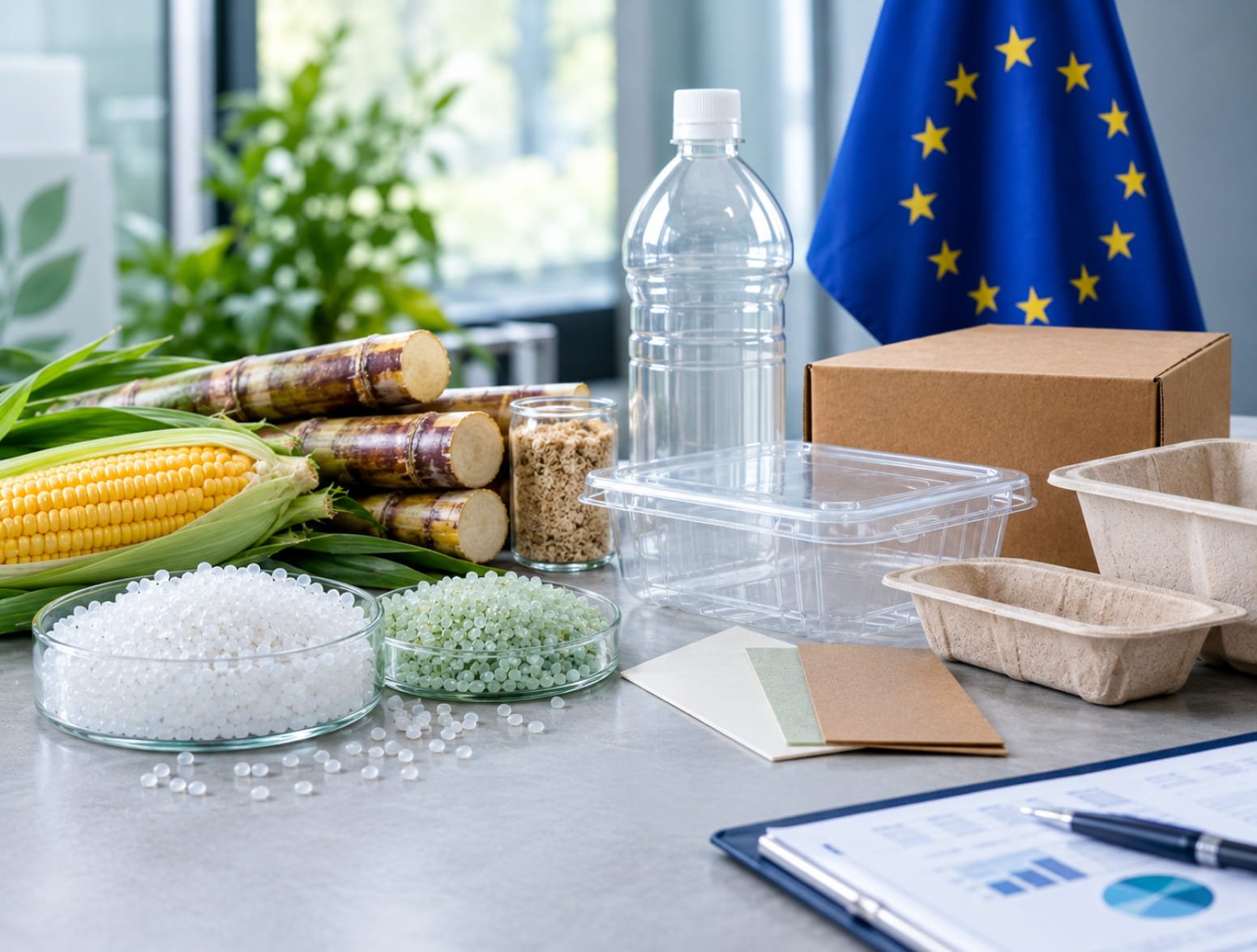
The European Commission has launched a public consultation on bio-based feedstocks in plastic packaging. The outcome could introduce new sustainability requirements, targets for renewable raw materials and potentially greater flexibility in meeting recycled-content obligations under the PPWR.
The future of plastic packaging in Europe could become less dependent on fossil-based raw materials. On 21 October 2026, the European Commission launched a public consultation on bio-based feedstocks in plastic packaging, inviting businesses and stakeholders to contribute to a possible new regulatory framework under Article 8 of the Packaging and Packaging Waste Regulation (PPWR).
While the PPWR currently focuses on packaging waste reduction, recyclability and mandatory recycled content, the Commission is examining whether plastics made from renewable biological resources could play a greater role in achieving the EU’s circular economy and sustainability objectives.
For businesses, this could create new opportunities to diversify packaging materials, reduce dependence on fossil-based plastics and develop longer-term sustainable packaging strategies.
However, important questions remain: Can bio-based plastics contribute to recycled-content targets? Which feedstocks would qualify as sustainable? And when can companies expect clearer regulatory requirements?
What are bio-based plastics, and why are they relevant?
Bio-based plastics are produced wholly or partly from renewable biological resources, such as sugar cane, corn, cellulose or wood residues, rather than exclusively from fossil-based feedstocks.
They could help reduce dependence on fossil resources and potentially lower the carbon footprint of plastic packaging.
However, bio-based does not automatically mean biodegradable, compostable or recyclable. Their environmental performance depends on sourcing, production processes and compatibility with existing recycling systems.
How does this relate to the PPWR?
Under Article 7, the PPWR introduces mandatory minimum recycled-content requirements for plastic packaging from 2030, ranging from 10% to 35% depending on the packaging category, subject to applicable exemptions and implementation conditions.
Currently, virgin bio-based plastics do not count towards these recycled-content targets.
However, Article 8 opens the possibility of a broader role for bio-based feedstocks. The Commission is examining whether to introduce:
- Sustainability requirements for bio-based raw materials.
- Targets for the use of bio-based feedstocks in plastic packaging.
- Limited opportunities to substitute bio-based content for recycled content in certain food-contact packaging applications where suitable recycling technologies are unavailable.
This could create additional options for packaging manufacturers, particularly where incorporating recycled content remains technically challenging.
Importantly, no new bio-based content targets or substitutions have been approved.
What is the consultation about, and when can businesses expect results?
The European Commission is seeking input on the availability, performance, environmental impact and sustainability of bio-based feedstocks, as well as possible regulatory measures to encourage their use.
The public consultation opened on 21 October 2026 and remains open until 13 January 2027.
Under Article 8 of the PPWR, the Commission must complete its review by 12 February 2028 and may propose additional legislation. The outcome of the consultation will help determine whether new requirements or incentives for bio-based plastics are needed.
Until new legislation is adopted, existing PPWR requirements remain unchanged.
What does this mean for businesses and their packaging strategy?
The consultation signals that bio-based plastics could become an additional element of future sustainable packaging strategies, complementing rather than replacing recycled materials.
For businesses, this means evaluating potential alternatives while ensuring compliance with current PPWR obligations.
Key considerations include:
- Material selection: Assess whether bio-based alternatives meet performance, recyclability and sustainability requirements.
- Supplier documentation: Obtain reliable information about material composition, feedstock origin and environmental performance.
- Long-term compliance: Prepare for recycled-content targets while monitoring potential changes to bio-based content requirements.
The central challenge is to develop packaging solutions that combine regulatory compliance, environmental performance and commercial feasibility.
How PackIntelX supports your packaging strategy
PackIntelX helps businesses translate PPWR requirements into practical packaging decisions. Through regulatory consulting, recyclability analysis and digital packaging data management, we support companies in evaluating their packaging portfolios, managing supplier information and preparing compliance documentation.
Want to understand how PPWR requirements affect your packaging materials and future strategy?
Explore our PPWR solutions and speak with our experts →