Key Takeaways
What is EPR compliance? Fulfilling the registration, reporting and financial obligations that apply to you as the producer of packaging in a particular EU Member State.
Who must comply? The company that qualifies as the EPR producer in the relevant Member State. This depends on the packaging flow, supply chain and market.
What changed on 12 August 2026? The PPWR became generally applicable and introduced a more harmonised EU framework for packaging and EPR. National EPR systems and registration/reporting obligations continue to apply.
Is there one EU registration? No. Producer registration remains country-specific.
What does it cost? EPR fees vary by country and commonly depend on packaging quantities, materials and national fee structures. Recyclability-based modulation will become increasingly relevant under the PPWR.
First step: Map the countries and packaging flows in scope and determine who is the producer in each market before registering.
• Fastest first step: Download PackintelX’s free EPR factsheet about EPR obligations in different EU member states → packintelx.com/epr
What Is EPR Compliance for Packaging Businesses?
EPR (Extended Producer Responsibility) compliance means fulfilling the registration, reporting and financial obligations that apply to you as the producer of packaging in a particular EU Member State. Depending on the country and packaging flow, this can include registering with a national producer register, reporting packaging quantities and materials, and paying fees that finance collection, sorting and recycling.
The first step is therefore to determine who qualifies as the producer in each market. Brand owners, manufacturers, importers, distributors, retailers or distance sellers can all potentially fall under EPR obligations, but their role alone does not automatically determine producer responsibility.
EPR is not new — Many EU member states, including France and Germany, already had national packaging EPR systems before the PPWR became generally applicable on 12 August 2026. What PPWR introduces is a more harmonised European framework for EPR, while registration procedures, reporting requirements, fee structures and compliance processes continue to differ between Member States. If you need the full regulatory background — legal basis, definitions, and how EPR fits into the wider PPWR — see our complete EPR guide. This article focuses on the action plan: practical steps businesses need to take to determine and manage their EPR obligations across EU markets.
Who Needs to Comply With EPR in the EU?
If you sell in eight EU countries, expect to register separately in all eight — there’s no “one form covers the EU” option yet.
| Economic operator | Can be the EPR producer? | What matters |
| Brand owner | Yes | May be manufacturer and/or producer depending on the supply chain |
| Filler / packer | Yes | Depends on whether it qualifies as producer in the relevant Member State |
| Importer | Yes | Often relevant where packaging or packaged products enter a national market from abroad |
| Distributor / retailer | Yes | Can become producer depending on who first makes the packaging available in that market |
| Distance seller | Yes | Cross-border sales directly to end users can trigger producer obligations |
| Non-EU company | Yes | Producer and authorised-representative requirements must be assessed country by country |
Important: Economic operator roles alone do not determine EPR responsibility. The specific packaging flow and the Member State in which the packaging is first made available must be assessed.
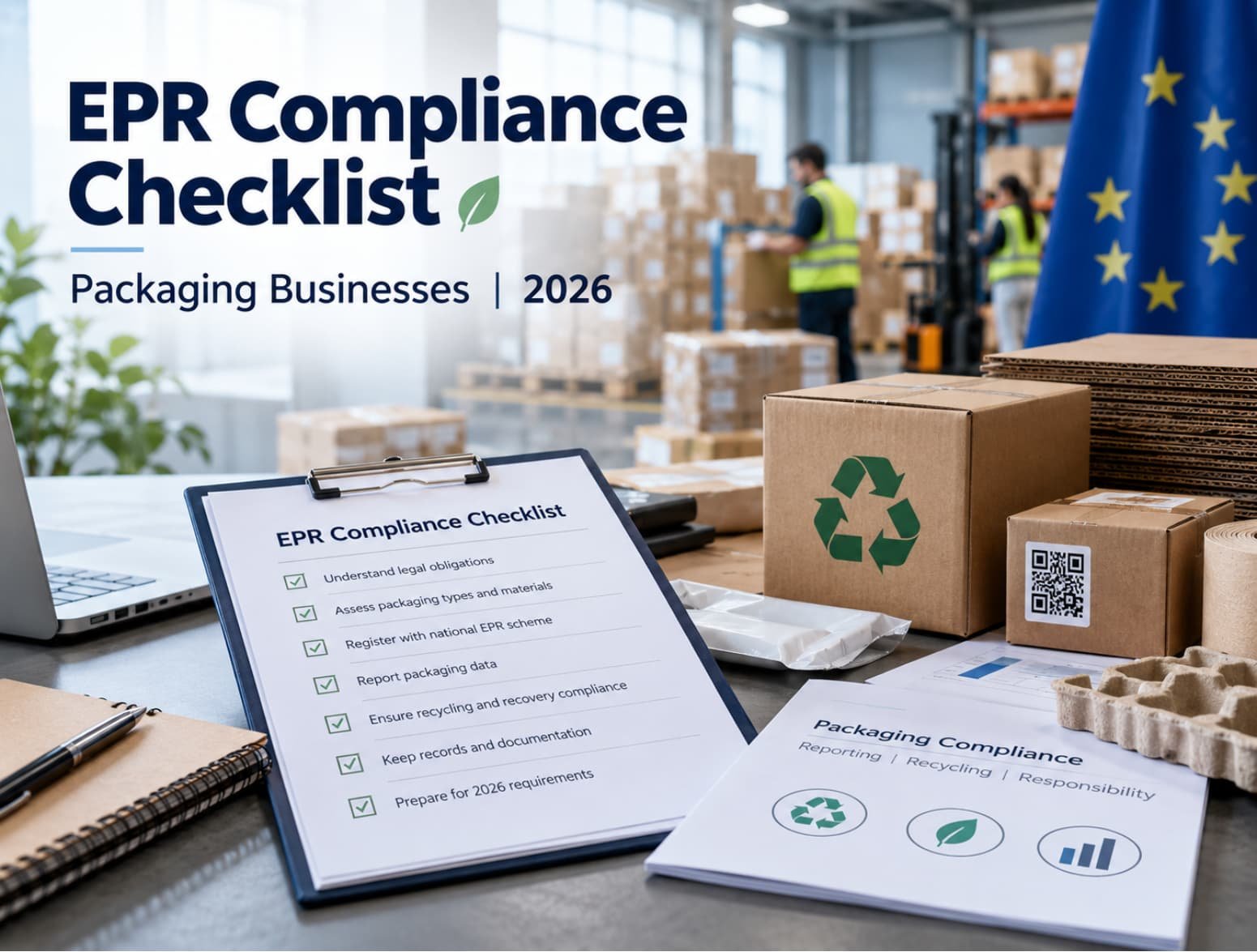
The EPR Compliance Checklist: 9 Steps to Get (and Stay) Compliant
| Step | Why it matters |
| Map the countries where your packaging is placed on the market. | EPR obligations are linked to individual Member States, so you first need to understand where your packaging flows. |
| Determine the EPR producer for each packaging flow and country. | Registration is per-country, so this list defines your entire to-do list. |
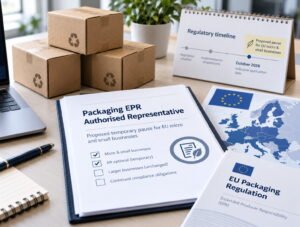
| Check whether an Authorised Representative is required | If you qualify as the producer in a Member State where your company is not established, check whether an Authorised Representative must be appointed under the PPWR and the applicable national rules. |
| Register with the national producer register / PRO in each country | Registration and operational EPR requirements continue to be organised through national systems. There is currently no single EU-wide registration that replaces national producer registrations. |
| Classify packaging by material and quantities placed on the market | Material and weight data form the basis for most EPR reporting and fee calculations, while exact categories and fee structures differ by country. |
Determine the applicable reporting frequency and deadlines
Reporting periods and deadlines differ by country and scheme and may be annual, quarterly or follow another reporting cycle.
Understand the applicable EPR fee structure
Fees vary by country, packaging material, quantity and national EPR scheme. Eco-modulation and other national fee criteria may also apply.
Prepare for increasing recyclability-based fee modulation
The PPWR introduces a more harmonised framework for modulating financial contributions based on recyclability performance, while the detailed implementation and fee levels remain relevant at national level.
Set up a process to monitor, report and document compliance
Producer roles, packaging volumes, reporting requirements and fee structures can change. A central reporting calendar and reliable packaging data help maintain compliance across multiple markets.
EPR Registration & Fees: How Countries Differ
Registration requirements and fee structures differ by country. Most EU markets run their own national producer register, calculate fees based on packaging weight and material type, and apply some form of discount for packaging that’s easier to recycle. Exact rates, reporting cycles, and registration steps vary by country and are updated regularly — confirm the current requirements for each market you sell into.
For Germany-specific detail, see Germany VerpackDG: Eco-Modulated Fees & PPWR Compliance. For France, see France Professional Packaging EPR 2026.
EPR Timeline: What Businesses Need to Know
● 12 August 2026 — The PPWR became generally applicable across the EU and introduced a more harmonised framework for producer responsibility. Existing national EPR registration, reporting and fee systems continue to apply.
● 2026–2029 — EPR obligations remain largely operationalised through national systems. Registration procedures, reporting cycles, fee structures and Authorised Representative requirements therefore continue to differ between Member States.
● From 2030 onwards — Further PPWR harmonisation takes effect, including stronger links between packaging recyclability and the modulation of producer responsibility fees.
What Changed for EPR After 12 August 2026?
Since 12 August 2026, the PPWR has introduced a more harmonised EU framework for EPR, while national registration and fee systems remain in place.
● Producer definition: The PPWR introduces a common EU definition of who qualifies as the producer in each Member State.
● Authorised Representatives: For cross-border distance sales, producers must appoint an EPR Authorised Representative in Member States where they are not established. Member States may also require this for third-country producers.
● Further harmonisation: Registration and reporting formats will become more standardised across the EU, and EPR fee modulation will increasingly be linked to PPWR recyclability grades A, B and C.
The practical task remains country-specific: determine where you qualify as the producer, appoint an Authorised Representative where required, and manage registrations, reporting and fees in each relevant Member State.
What Happens If You Don’t Comply?
● Fines and penalties — Penalties are set at Member State level and can be significant. The exact consequences depend on the applicable national rules.
● Sales restrictions — Producers that are not properly registered may be prohibited from making packaging or packaged products available in the relevant Member State.
● Marketplace restrictions — Online platforms must obtain and assess certain EPR registration information before allowing producers to use their services. Missing or incomplete information can therefore restrict access to marketplace services.
● Suspension by fulfilment service providers — If required EPR information is inaccurate or incomplete and is not corrected, fulfilment service providers may be required to suspend their services until the issue is resolved.
● Additional national enforcement measures — Depending on the Member State, further measures may apply where registration, reporting, payment or other EPR obligations are not fulfilled.
Get Your Free EPR Factsheet
Don’t guess at country-specific EPR rules. PackintelX’s free factsheet breaks down registration, thresholds, reporting deadlines, and eco-modulation criteria across nine EU markets — Belgium, Denmark, Spain, Poland, Sweden, Ireland, France, Germany, and the Netherlands.
Download the free EPR factsheet
Need hands-on help across multiple countries? See how PackintelX’s EPR consulting services can manage registration and reporting for you.
FAQs
What is EPR compliance for packaging companies?
EPR compliance means fulfilling the registration, reporting and financial obligations that apply to you as the producer in a particular EU Member State. This typically includes registering with the relevant national producer register, reporting packaging quantities and materials according to the applicable reporting schedule, and paying EPR fees.
Who needs an EPR registration in the EU?
Manufacturers, brand owners, importers, distributors, fillers, retailers and distance sellers can all potentially qualify as the producer. Whether your company actually needs to register depends on the packaging flow, the Member State and who first makes the packaging or packaged product available on that market.
Is there one EU-wide EPR registration number?
No. Producers must register in each Member State where they qualify as the producer. National producer registers remain in place, although the PPWR introduces increasingly harmonised registration and reporting formats across the EU.
What happens if I don’t register for EPR?
If registration is required but has not been completed, you may face fines or other national enforcement measures and may be prohibited from making packaging or packaged products available in that Member State. Missing EPR registration can also affect access to online marketplace services.
How much are EPR fees?
EPR fees vary by country and scheme. Packaging weight, quantity and material type are typically important factors, while national eco-modulation rules and other fee criteria may also apply. Under the PPWR, fee modulation will increasingly be linked to harmonised recyclability performance grades A, B and C.
Do micro-enterprises need to register for EPR?
Micro-enterprises are not generally exempt from EPR. However, the PPWR contains specific rules that can shift producer responsibility to a domestic packaging supplier in certain cases. Producers placing less than 10 tonnes of packaging on a Member State’s market per year may also benefit from simplified reporting requirements.
Did EPR start on 12 August 2026?
No. Packaging EPR already existed in many EU Member States before the PPWR became generally applicable on 12 August 2026. The PPWR introduces a more harmonised EU framework, while registration, reporting and fee obligations continue to be managed through national systems.
What changed for EPR on 12 August 2026?
The PPWR introduced a harmonised EU definition of the producer and new rules for cross-border EPR compliance, including mandatory Authorised Representatives for certain distance-selling situations. Registration and reporting formats will also become increasingly harmonised across national producer registers.