The Packaging and Packaging Waste Regulation (PPWR) is reshaping packaging compliance across the European Union. From recyclability and packaging minimisation to technical documentation and labelling, businesses are expected to demonstrate that their packaging complies with a growing number of regulatory requirements.
For manufacturers, importers, brand owners, distributors, and retailers, simply understanding the regulation is no longer enough. Businesses need a structured way to evaluate whether their packaging meets the applicable PPWR requirements before products are placed on the EU market.
This is where a PPWR Check becomes essential. A PPWR compliance check helps organisations assess their current level of readiness, identify compliance gaps, and understand the actions needed before the regulation becomes fully applicable. Whether you are reviewing a single packaging format or an entire product portfolio, a structured assessment provides greater clarity and helps reduce compliance risks.
This guide explains what a PPWR Check is, who should perform one, and the key areas every business should evaluate to prepare for the PPWR.

What Is a PPWR Check and Why Does It Matter?
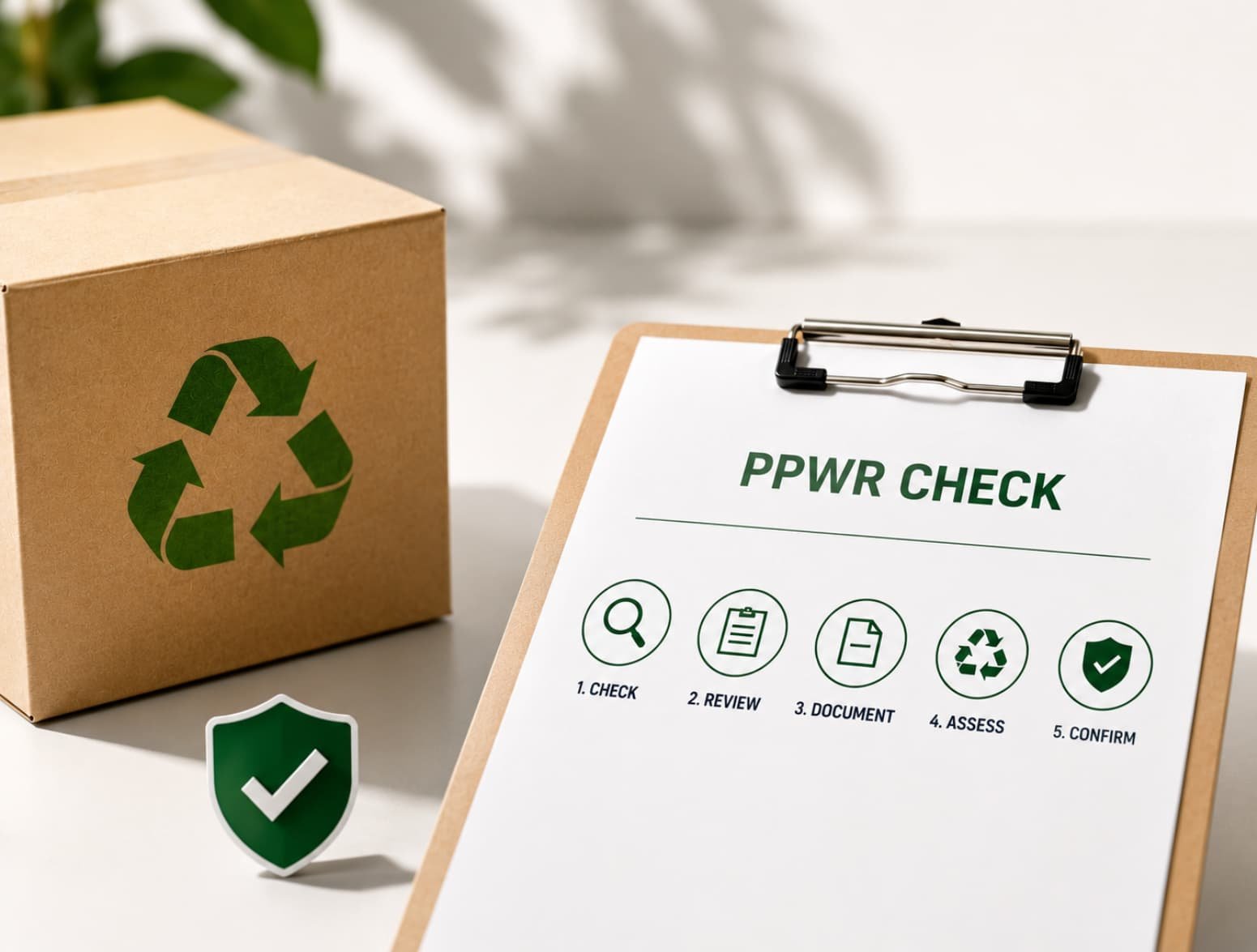
A PPWR Check is a structured assessment that evaluates whether your packaging and internal compliance processes align with the requirements of the Packaging and Packaging Waste Regulation.
Rather than waiting until regulatory inspections or customer requests reveal missing information, a PPWR compliance check allows businesses to identify potential issues early. It provides a clear understanding of where improvements are needed and helps organisations prioritise the activities required to achieve compliance.
Conducting a PPWR assessment also supports better collaboration across departments by bringing together packaging, procurement, regulatory affairs, sustainability, and quality teams around a common compliance framework.
Some of the key benefits include:
- Identifying compliance gaps before implementation deadlines.
- Improving visibility into packaging materials and components.
- Strengthening supplier collaboration and data collection.
- Organising technical documentation and compliance records.
- Supporting long-term regulatory readiness.
Businesses that conduct regular packaging compliance checks are often better prepared for evolving regulatory requirements and future market surveillance activities.
Who Should Perform a PPWR Compliance Check?
The PPWR applies to a wide range of businesses involved in placing packaging or packaged products on the EU market. Although legal obligations differ depending on an organisation’s role, every business should understand how the regulation affects its operations.
A PPWR Check is particularly valuable for:
- Manufacturers producing packaged products.
- Importers bringing packaged goods into the European Union.
- Brand owners placing products on the EU market.
- Retailers selling own-brand packaged products.
- Packaging manufacturers and converters.
- Distributors responsible for supplying packaged goods.
- Sustainability, regulatory affairs, and compliance teams.
Conducting an assessment early helps organisations understand their specific obligations while creating a structured roadmap for compliance.
What Should Every PPWR Compliance Check Verify?
A successful PPWR compliance check goes beyond reviewing legislation. It examines the information, documentation, and processes needed to demonstrate conformity with the regulation.
The following areas should be included in every packaging compliance assessment.
1. Business Role and Legal Responsibilities
The first step is identifying your role within the packaging supply chain. Whether your organisation acts as a manufacturer, importer, distributor, or brand owner will determine the obligations that apply under the PPWR. Understanding these responsibilities provides the foundation for every compliance activity.
2. Packaging Materials and Components
Businesses should review every packaging format placed on the EU market. This includes assessing packaging materials, components, closures, labels, adhesives, coatings, and other elements that may affect recyclability or compliance with substances of concern requirements. Maintaining accurate packaging data also improves traceability and simplifies future reporting obligations.
3. Supplier Documentation
Many compliance challenges begin with incomplete supplier information.
A PPWR assessment should verify whether suppliers have provided:
- Material declarations.
- Technical specifications.
- Certificates where applicable.
- Supporting compliance evidence.
- Packaging composition information.
Building a structured supplier documentation process strengthens compliance while reducing administrative effort.
4. Technical Documentation
Technical documentation forms one of the most important elements of PPWR compliance. Businesses should verify that documentation is complete, accurate, and readily available for inspections or conformity assessments. Documentation should include packaging specifications, supplier information, supporting evidence, laboratory reports where applicable, and other records demonstrating compliance.
5. EU Declaration of Conformity
The EU Declaration of Conformity (EU DoC) confirms that packaging complies with the applicable PPWR requirements. A PPWR compliance check should determine whether businesses have the information required to prepare and maintain accurate declarations supported by complete technical documentation.
6. Recyclability and Design Requirements
Packaging should also be assessed against recyclability requirements introduced by the PPWR. Businesses should review packaging design choices, material combinations, labels, inks, adhesives, and closures to identify opportunities for improving recycling performance and supporting future compliance obligations.
7. Packaging Data Management
Accurate packaging data is becoming increasingly important as regulatory requirements evolve. A PPWR Check should evaluate whether packaging information is stored in a structured, centralised system that supports supplier collaboration, documentation management, and future reporting requirements.
PPWR Compliance Checklist
| Compliance Area | Questions to Ask |
| Business role | Have legal responsibilities been identified? |
| Packaging portfolio | Are all packaging types documented? |
| Supplier documentation | Have declarations and supporting evidence been collected? |
| Technical documentation | Is documentation complete and audit ready? |
| EU Declaration of Conformity | Is the required information available? |
| Recyclability | Has packaging been assessed against PPWR requirements? |
| Packaging data | Is compliance information centrally managed? |
Common Mistakes Companies Make During a PPWR Self-Assessment
Many businesses begin their PPWR journey by reviewing the regulation and comparing it against their existing processes. While this is a good starting point, self-assessments often overlook critical areas that can affect long-term compliance.
Some of the most common mistakes include:
1. Assuming Existing Compliance Covers PPWR
Businesses may already comply with national packaging regulations or Extended Producer Responsibility (EPR) requirements. However, the PPWR introduces additional obligations related to packaging design, technical documentation, recyclability, labelling, and conformity assessment. Assuming existing processes are sufficient can leave important compliance gaps.
2. Incomplete Packaging Data
A compliance assessment is only as reliable as the information available. Missing packaging specifications, material composition details, or supplier declarations make it difficult to determine whether packaging meets PPWR requirements.
3. Limited Supplier Engagement
Suppliers play a crucial role in providing material declarations, certificates, and technical information. Businesses that do not establish structured communication with suppliers often struggle to collect the evidence required to demonstrate compliance.
4. Poor Documentation Management
Storing compliance records across emails, spreadsheets, and multiple systems increases the risk of missing or outdated information. Without organised documentation, responding to customer requests or regulatory inspections becomes significantly more challenging.
5. Treating Compliance as a One-Time Activity
The PPWR is supported by implementing acts and technical guidance that will continue to evolve. Businesses should treat compliance as an ongoing process rather than a single project completed before the implementation deadline.
Manual Checklist vs Automated PPWR Check Tool
Both manual assessments and digital tools can help organisations understand their compliance status. However, as packaging portfolios become larger and regulatory requirements more detailed, automated solutions provide greater efficiency and visibility.
| Manual PPWR Checklist | Automated PPWR Check Tool |
| Relies on spreadsheets and manual reviews | Provides a structured digital assessment |
| Time-consuming for large packaging portfolios | Quickly evaluates multiple compliance areas |
| Greater risk of inconsistent information | Standardised assessment process |
| Limited visibility across suppliers | Supports centralised supplier collaboration |
| Manual document collection | Streamlined packaging data management |
| Difficult to track progress | Clear overview of compliance readiness |
| May overlook regulatory updates | Designed to align with evolving PPWR requirements |
An automated assessment helps businesses save time while improving the consistency and accuracy of their compliance review.
How the PackIntelX’s PPWR Check Simplifies Compliance
Preparing for the PPWR can seem overwhelming, particularly for businesses managing multiple products, suppliers, and packaging formats. A structured assessment helps simplify this process by identifying where your organisation currently stands and what actions should be prioritised.
The PackIntelX PPWR Check is designed to help businesses evaluate their packaging compliance readiness through a guided assessment based on the requirements of the Packaging and Packaging Waste Regulation.
The assessment helps organisations:
- Identify their likely obligations under the PPWR.
- Understand how the regulation applies to their business.
- Evaluate packaging compliance readiness.
- Highlight documentation and supplier information gaps.
- Improve packaging data management.
- Prioritise the next steps towards compliance.
Rather than spending weeks interpreting complex regulatory requirements, businesses receive a practical starting point that supports informed decision-making and structured implementation.
Why a Digital PPWR Assessment Delivers Greater Value
As packaging compliance becomes increasingly data-driven, digital assessments offer advantages beyond simply answering compliance questions.
A digital PPWR Check enables businesses to:
- Build a structured compliance roadmap.
- Improve collaboration between regulatory, procurement, quality, and sustainability teams.
- Strengthen supplier communication.
- Reduce manual administrative work.
- Support future technical documentation requirements.
- Prepare more effectively for audits and market surveillance.
By establishing a clear picture of current compliance readiness, organisations can make more informed decisions and allocate resources where they are needed most.
Run Your Free PPWR Check
The first step towards PPWR compliance is understanding where your business stands today.
The PackIntelX PPWR Check provides a practical way to assess your packaging compliance readiness, identify potential gaps, and understand the actions required before the regulation becomes fully applicable.
Whether you are a manufacturer, importer, brand owner, or retailer, a structured compliance assessment can help you move from uncertainty to a clear implementation plan.
Run your free PPWR Check today and take the first step towards building a more efficient, audit-ready packaging compliance process.

Conclusion
The Packaging and Packaging Waste Regulation introduces new expectations for businesses placing packaging on the EU market. Meeting these requirements begins with understanding your current level of readiness.
A structured PPWR compliance check helps organisations evaluate packaging data, supplier documentation, technical records, and regulatory obligations while identifying areas that require further attention. By conducting an assessment early, businesses can reduce compliance risks, improve operational efficiency, and prepare confidently for future regulatory requirements.
PackIntelX supports organisations throughout their compliance journey with the PPWR Check, expert workshops, technical documentation support, supplier collaboration, and digital compliance solutions that simplify packaging compliance across the European Union.
FAQs
1. What is a PPWR Check?
A PPWR Check is a structured assessment that helps businesses evaluate whether their packaging, documentation, and internal processes align with the requirements of the Packaging and Packaging Waste Regulation. It identifies compliance gaps and provides a roadmap for improving regulatory readiness.
2. Who should perform a PPWR compliance check?
Manufacturers, importers, brand owners, retailers, distributors, and packaging suppliers placing packaged products on the EU market should perform a PPWR compliance check to understand their obligations and prepare for implementation.
3. What does a PPWR assessment include?
A PPWR assessment typically reviews business roles, packaging materials, supplier documentation, technical documentation, recyclability requirements, packaging data management, and readiness for preparing the EU Declaration of Conformity.
4. Why is a digital PPWR Check better than a manual checklist?
Digital assessments provide a more structured and consistent evaluation, simplify packaging data management, improve supplier collaboration, reduce manual effort, and offer better visibility into compliance readiness across multiple products and packaging formats.
5. How does the PackIntelX PPWR Check help businesses?
The PackIntelX PPWR Check helps businesses understand how the PPWR applies to their operations, identify compliance gaps, evaluate documentation readiness, and establish a practical roadmap towards achieving packaging compliance.